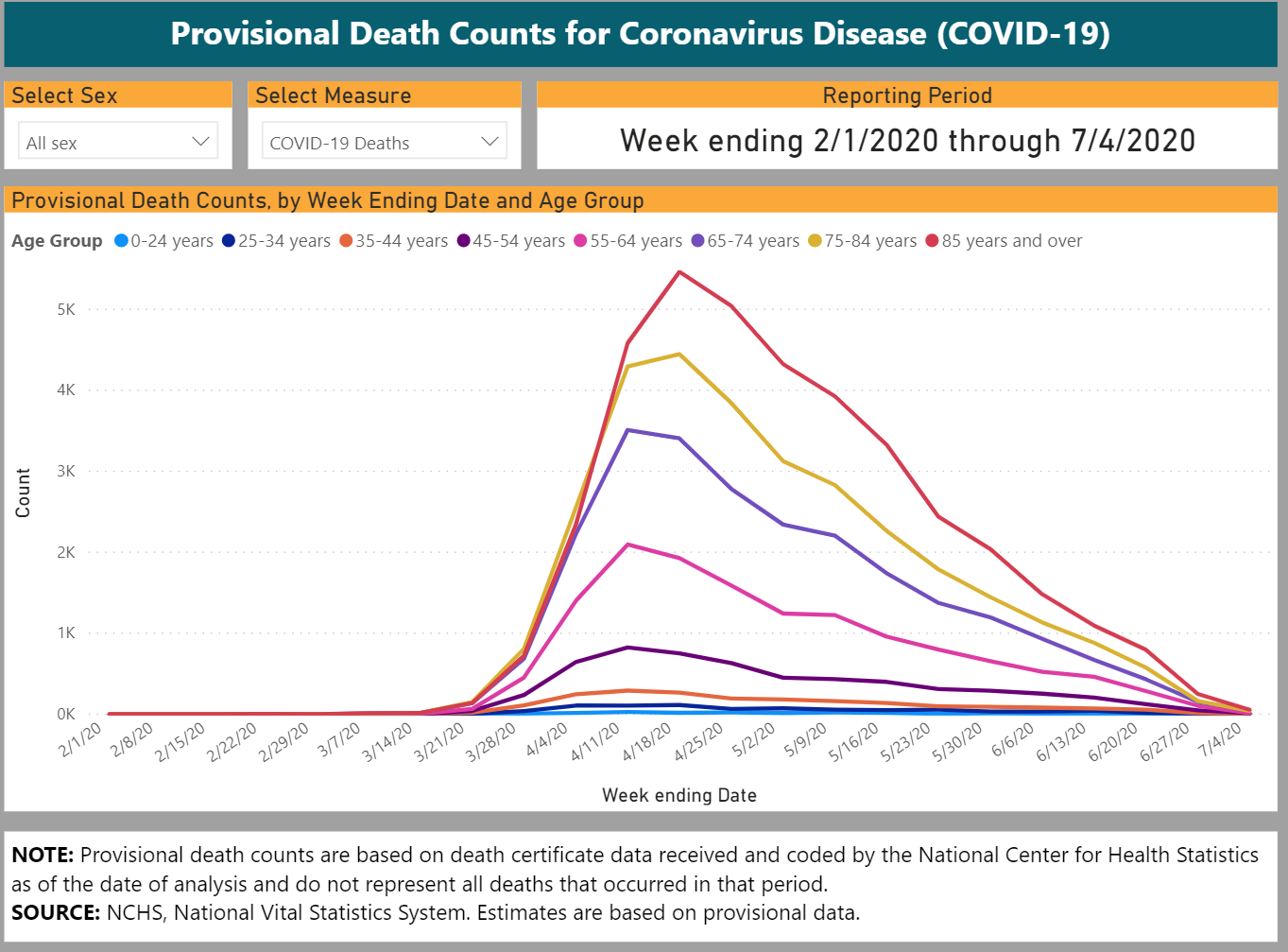
Here we are more than six months into the lockdown and 99.94% of Americans haven’t died from the disease… but that’s still over 200,000 dead Americans. If you look at all the US military deaths in every war/skirmish/conflict of since the end of World War 2, whether it was in combat or not, COVID has still killed more people and it’s clearly not done yet. We’ll probably be able to throw World War 1 into that equation before we’re done.
I haven’t written a post for about six weeks, but the story hasn’t changed much. Every time I think about writing a post I realize that I’ve already said that. So today let’s look back at some quotes from previous posts and see how they held up:
One challenge is that new data is arriving all the time as the world’s scientific community joins forces to figure this virus out. (March 6)
This quote came on March 6 which is one week before my lockdown counter started, but it’s still true today. There’s a lot we don’t understand and the scientific community is still learning. This is never going to end. We’re still learning about how the common flu spreads and that’s been around for 100 years. The one thing clear about this virus is that it is the perfect mix of incubation rate and mortality rate to be smack dab in that gray area where people can argue about it while the bodies pile up.
Humans aren’t great at absorbing the implications of math, especially in two ways that make this a tough problem. First, it’s hard to grasp the speed of exponential growth. … The second math complication is that humans don’t process probability well. (March 14)
Yep. If people understood the data, why would they be pushing back so hard against the lockdown guidance? I realize that my simplistic engineering-brain logic is flawed, but I ask myself this question daily.
Do we all agree that it’s bad if this spreads unabated? … Do we all agree that this spreads very quickly when we don’t do anything about it? (March 24)
I don’t have these questions anymore because it’s very clear that we don’t all agree on these fundamental issues.
In the end, my bar is “If everyone did this, would it be ok?” You can twist that in lots of ways to make anything seem permissible or not, but when viewed honestly and for lack of anything better, it feels like a reasonable starting point. (April 6)
That ethical bar of “if everyone did this, would it be ok?” isn’t my own idea but it always stuck with me as a good guideline. Are you going to die from COVID if you attend a party? Probably not, but it’s clearly not good if everyone did that. Unfortunately, Americans (and sinful humans in general) focus on optimizing for personal happiness.
Now that there is a glimmer of hope, people are starting to think about when we can lift the bans. Short summary: don’t hold your breath. Let’s look at the data. We just peaking now. We’re roughly halfway through this. (April 15)
“Halfway through this”. Nope. Not even close. My new guess is that either we start getting back to “normal” next summer or we live in some sort of hybrid situation for a very long time. I do believe that science will solve this eventually, but it remains to be seen how good the vaccines are, how long they last, and how many people will take them.
What’s the right balance point? I think all we know for sure right now is that “it depends”. With this heavy social and political push to end the lockdown, it feels pretty inevitable that we’re going to start growing exponentially again. Very little has changed since the first growth period. Social distancing is the only tool we have to fight this. … I do think we’re going to oscillate back and forth a bit until we find the least amount of lockdown that keeps us at some sustainable balance of infections and economic pain. I don’t think anybody has the answers about what that balance point is yet so we’ll have to fail a few times as we get it figured out. (April 29)
We’ve seen this play out across the country as various states go through waves alternating of infection and lockdown. The waves are getting smaller but they’re still coming. Here in King County we’ve been through two waves but it’s looking like wave 3 is starting.
As if deciding how to handle things inside my own family wasn’t enough of a challenge, I’m also an elder at church which means I’ve been having a lot of difficult meetings to figure out how to minister to our members…. My main challenge in this was separating out valid Christian needs and desires from political anger and frustration. (June 13)
Being part of the leadership at church is the toughest job I’ve ever had at church. I’m asked to guide people away from human weakness and sin while accepting viewpoints that differ from my own but still align with the Bible.
So in conclusion, as I look back over all these posts, I see lots of data that explains the spread of the virus and the impact it’s having on our world, but I think there’s plenty of that available now. These are the key ones that I look at to form my opinions:
I feel like I’ve made all the points I can make with data showing the spread of the virus and why we as Christians are bound to comply with the lockdown, but I know I can’t change the world. So if I post on this again, it will be because I’ve figured out how to post about the impact this pandemic is having on our family without getting too far into the “why” of our choices. If the why isn’t clear yet, more posts aren’t going to change that.
On a more positive note, school has been a bright spot in our life. We struggled with the decision about whether to send Elijah or not, but after watching the school go through months of preparation for this year and reading through the comprehensive plan they created to comply with all the guidelines, we’re happy to see it going smoothly. Not only are people following the rules but they seem to be doing so willingly and with cheer. It has been a very positive experience.
I struggle with how to wrap up these thoughts, but I want to mention that Pastor is going through a new Bible study series on the Psalms. While we haven’t gotten to Psalm 62 yet, it felt like a fitting way to end this post:
My soul, rest quietly in God alone,
for my hope comes from him.
He alone is my rock and my salvation, my fortress.
I will not be disturbed.
My salvation and my honor depend on God, my strong rock.
My refuge is in God.
Trust in him at all times, you people.
Pour out your hearts before him.
God is a refuge for us. (Psalm 62:5-8)





COVID-19: Day 230
I said that I was going to stop posting so much about the pandemic, but I do want to keep posting periodically so I can look back at the stats. So here’s a quick checkin on where we are now.
Global deaths: 1.2 million
US deaths: 228 thousand
This has been a rough stretch for the US. Seven states set a record high for daily deaths and the Progress to Zero (P0) metric has fallen from 34% to 0% in the last three weeks. The upper/central part of the country is are getting hammered. The percentage of positive tests are going up too so it’s not just a matter of states doing more testing.
For many states, this is their first big wave. User Gullyn1 on the dataisbeautiful subreddit made a map showing what percentage of a counties total cases were discovered in the last month. This is somewhat similar to the P0 metric and I like these maps because they apply well regardless of the size of the county.
Locally we’re doing a bit better but we’re on a similar upswing. The R-value in King County is estimated at 1.3, the highest it has been in quite a while.
Just to the north of us, Snohomish is seeing more active cases per 100K people than they did in July. (Note that this chart in particular can be a little deceptive since it is directly related to the number of tests. It’s generally safer to rely on this specific chart for local trending more than for comparison of peaks.)
That Snohomish outbreak is particularly on my mind since that’s where Elijah goes to school. The school is amazingly still chugging along with only a couple quick shutdowns of specific classrooms for false alarms. Everyone seems to have fallen into a routine with the daily health attestation, new dropoff/pickup rules and the removal of any intermingling between classrooms. So far so good but I don’t expect it to continue forever, especially with the spike we’re seeing now leading into cooler temps (more people indoors) and holidays (more people getting together in groups.)
My company has said that the workers in this area won’t have to return to the office until July 2021 at the earliest. The previous date had been January so it’s nice to see them push it out to something that is hopefully more realistic. It seems like it will probably move out again but we’ll see how things go with vaccine approval, production, and acceptance by the general population. Personally I’m happy to keep working from home. I feel plenty productive and I love not having the commute! Although I do spend more time looking at opportunities to move out of suburbia if I’m not tied to the commute anymore…