For Christmas, my father-in-law gave me the 120 degree MC Etcher diamond drag engraver bit from Carbide 3D. It fits into my CNC router but is used without the router powered on. The tip is spring loaded so that it will have constant pressure with the surface as it gets dragged along. You can drag engrave many different materials so on a trip to Home Depot, I randomly picked out a couple tiles.
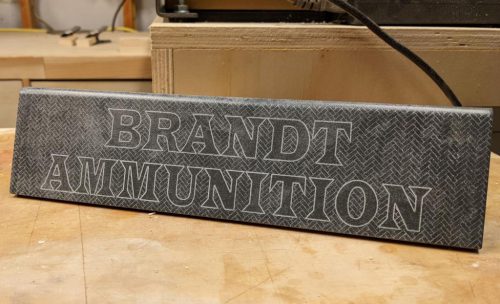
My first attempt was making a sign for the reloading bench that my father-in-law was building. I drew up a design with a herringbone background not knowing if it would work. The sound is a bit like nails on a chalkboard, but it worked great! I ended up going over parts of the design multiple times to get a more defined line.
I’m looking forward to trying some other materials too. I think a smooth granite tile could make really nice award plaque and some acrylic could be neat with edge lighting. The possibilities are endless and it’s a fun tool to have at my disposal.
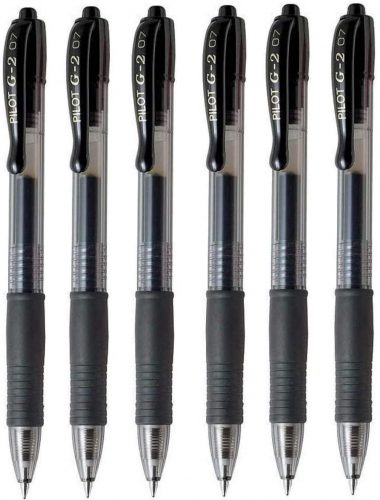
We have a lot of cheap pens around our house. They get collected from random locations and every time I grab one of them, I’m frustrated that they are not great to write with. I heard someone on a podcast mention the Pilot G2 0.7mm gel ink pen and they went on and on about how they threw away every other pen in their house once they found these. Then I randomly heard someone else talk about the same pen a few weeks later. Maybe it was some sneaky social marketing campaign, but it worked and I bought them.
This is now the only pen I buy. I will walk around the house to find one instead of writing with anything else.
(This isn’t a sponsored post, but that is an Amazon referral link.)
We still have a set of Motorola FRS radios that I got about 15 years ago. Elijah and his friends like to play with them, but the volume knob comes off easily. Sure enough, one of the knobs got lost last summer. When it happened, I thought, “If I had a 3D printer, I could make a new one.” Well now I have a 3D printer so I decided to give it a shot. There was an existing model on Thingiverse, but it was the wrong shape for my radio.
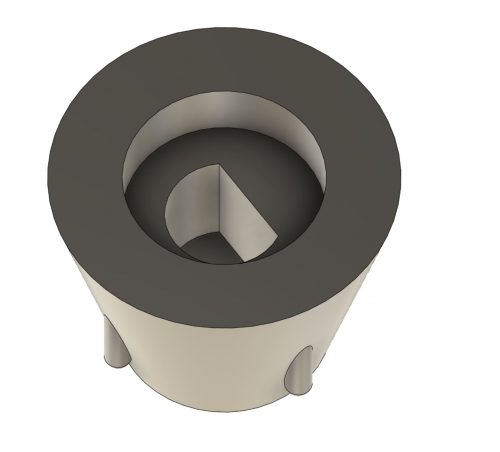
I’m a Fusion 360 newbie but I’ve been through I Like To Make Stuff’s excellent Fusion 360 For Makers class twice. It was time to try a design from scratch with no tutorial. It took me about 45 minutes and I’m sure that I did a lot of things the “wrong” way, but in the end, I had a model that looked pretty close to the original. I set everything up with parameters using measurements from my calipers so that if it didn’t fit quite right, I could just adjust the parameters and quickly change the model. The image below is an upside down view since that’s the part that actual matters the most. The only thing that I didn’t match from the original was the curved slope as it rises from the base to the top. I tried to do that a few different ways but gave up for now as it doesn’t make any functional difference.
It took about 25 minutes to print and I figured I’d have to go through a few iterations to get it to fit correctly, but to my shock, it fit perfectly the first time! It is very snug so it won’t be coming off by accident. In fact, it was so good that I printed a second one to replace the knob on the other radio too.
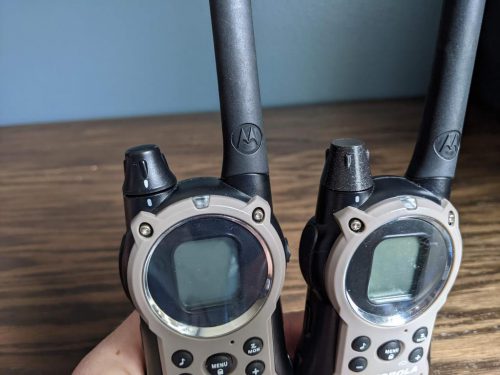
That image shows the original knob on the left and the printed knob on the right. It felt so good to go from idea to physical object in an hour or two! I even uploaded the model to Thingiverse: https://www.thingiverse.com/thing:5316963. I’ve found so many fun things to use there, I feel good contributing a bit too.
Yesterday marked two years from the semi-arbitrary date that I picked to be the start of COVID for our family. As much as I don’t want to write another COVID post, I feel like it’s good to keep documenting.
On Friday, Washington state lifted the mask mandate. Voluntary mask wearing was still nearly 100% in most stores over the weekend, but we’ll see how long that lasts. Over 80% of our county (12th largest in the country) has been vaccinated and if you cut it down to people 5 years and older, 92.5% have received at least one dose. This is awesome progress!
At work, campus is opening up again. This whole time I’ve wondered if everyone would slowly filter back into the office and give up on remote work, but that doesn’t seem to be the case at all. I don’t think I should share numbers, but a much larger percentage of people than I expected are working remotely at least part of the time. And even more encouraging is that a number of senior managers are moving to other parts of the country to work remotely full time. This really does feel like it is here to stay and I’ve officially given up my office at work.
Globally, the virus rages on. Countries are still setting new record highs of case counts and deaths. Vaccination rates are exceptionally low in most of Africa and other poorer countries. The vibe in America seems to be “yay it’s over!” but we can’t let up on the accelerator. There’s a lot of work to be done.
I also have a tough time believing the “yay it’s over” vibe. It does look like a lull in the storm, but as vaccinations wear off and we hit the end of summer, I don’t see anything preventing us from getting another spike in cases and/or another strain of the virus. We’re going to be living with this for a long time, but hopefully we’ll be able to use vaccines, masks, and social distancing to control the spread and kill as few people as possible.
It’s easy for me to spend my time looking ahead and wait for the next spike to come, but I’m trying to focus on enjoying the lull in the action and being thankful for it.
11 For I know the plans I have for you,” declares the Lord, “plans to prosper you and not to harm you, plans to give you hope and a future. 12 Then you will call on me and come and pray to me, and I will listen to you. 13 You will seek me and find me when you seek me with all your heart.
Do you remember the big thing that happened in March 2020? It was HORRIBLE. Our vacation got canceled! (Also, there was a global pandemic.) We had a trip to Hawaii planned and up until a day or two before we left, we didn’t know if we were going or not. The world decided for us and air travel was pretty much shut down. Our flights were canceled and eventually they decided to give us credit for them. Those credits were set to expire this spring so before Christmas, we somewhat randomly pointed to a calendar and rebooked figuring that either we’d cancel again and just forfeit our credits or things would get better and we’d go. Instead of the hotel/resort we had planned before, we booked a condo instead so that we could comfortably eat indoors even if COVID was raging. Days after we booked, Omicron hit but luckily for us, it peaked and by the time our trip rolled around, vaccinations were going well and states were rolling back mask mandates. We were able to take our trip during a very low risk time period just before the mask mandates ended and before the Safe Hawaii (vaccination or testing required) program ended. It was pretty much perfect timing! Ok, I think that’s enough COVID backstory, let’s get to the vacation!
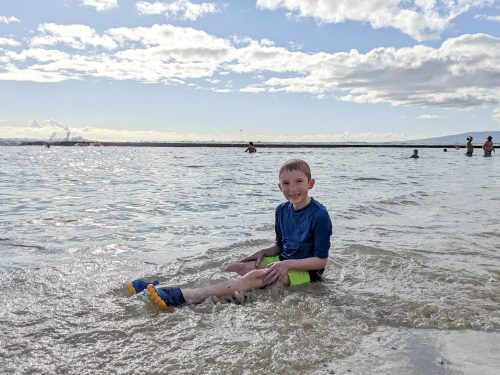
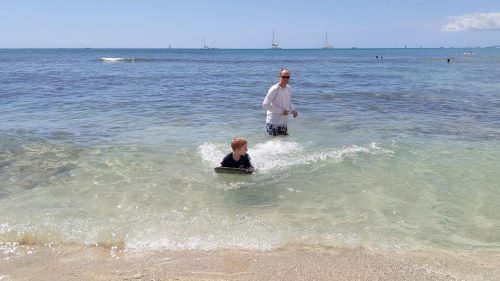
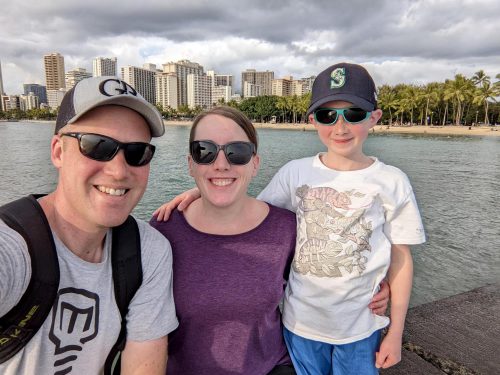
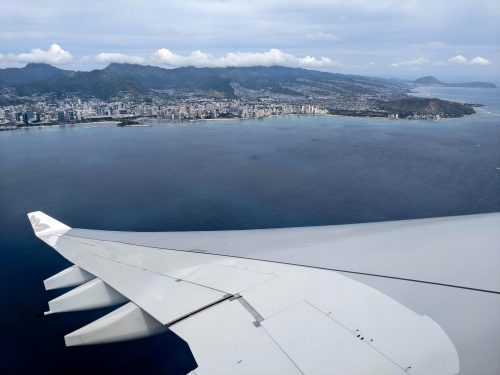
Our direct flight landed on Oahu on Thursday afternoon. The day had started around 4am so Tyla and I were ready to find some food and crash in the condo, but Elijah didn’t want to just SEE the beach, he wanted to swim! So we dug out his swimsuit and he got his first taste of swimming in the ocean, or at least in a sunny, warm ocean.
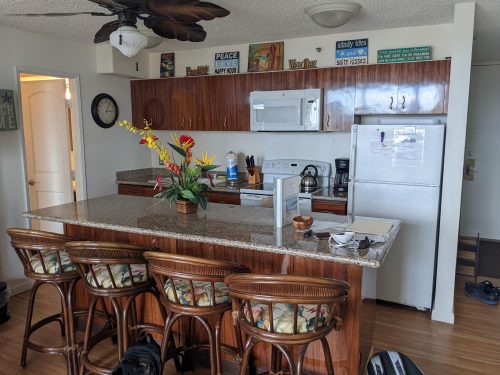
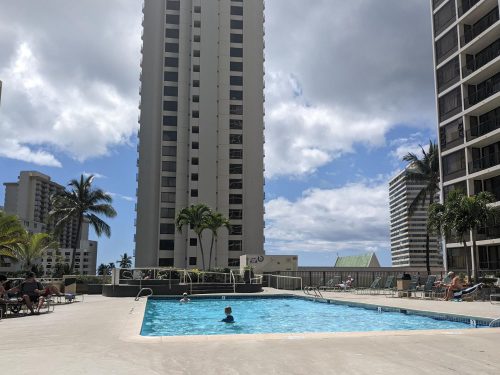
I won’t give a day by day recap, but each day involved some combination of swimming at the ocean and swimming in the condo pool. The condo was about a block off the ocean so it was a good mix of price and convenience. It came stocked with a beach umbrella, beach chairs, sand toys, boogie boards, and lots of other beach goodies.
We purposely picked this condo because of its location so that we wouldn’t need to rent a car, but a couple weeks before we left, I found a great deal through work. The condo came with a free parking spot (amazing!) so we pivoted and rented the car. That gave us a little extra mobility which helped immediately on our first night because I was able to go to Safeway and stock up on breakfast, lunch, and snack foods. For dinner, we tried various food trucks (Munchwagon and Five Star Poke were our favorites) as well as takeout from some restaurants.
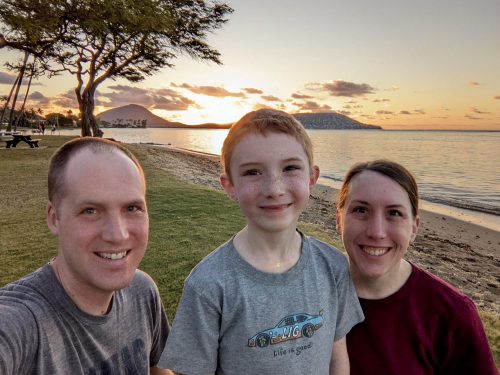
Our condo had a good view of Diamond Head Crater and we since we were still on Seattle time, we decided to get there right around sunrise (6:30am) and hike up before it got hot. Silly us. The lot opens at 6:00am and the lot fills up at 6:00am. The lot attendant suggested that we come back around 7:30-8:00 when the first batch of hikers come back down, so we drove around randomly until then. We randomly ended up at Kawaikui Beach Park and walked down to the beach just as the sun was peaking over a hill! The parking lot had quite a few cars but most of them must have been surfers because there were only a handful of people along the beach.
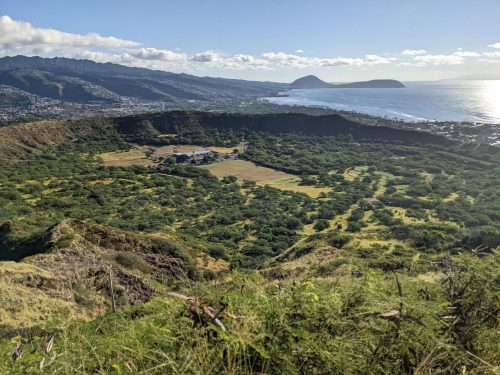
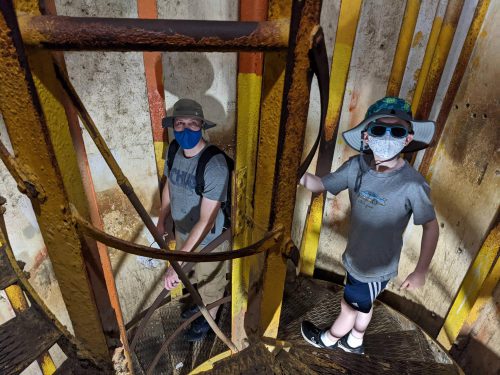
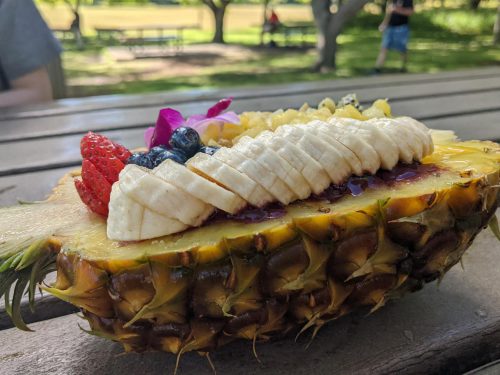
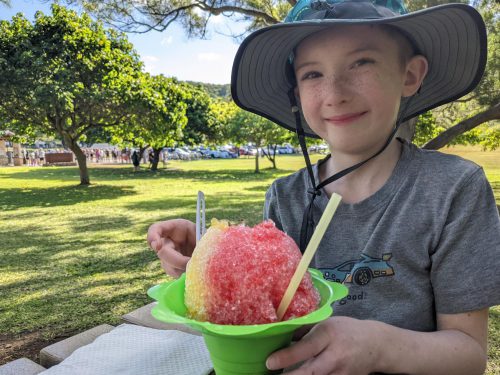
It was a beautiful quiet spot to hang out until we headed back to Diamond Head. Thankfully the tip was correct and we got a spot. The hike up wasn’t too bad physically, but it was packed. I know I say some trails around here are busy but this was solid people the whole way. We didn’t linger long at the top viewpoints because it was just a mass of hot, sweaty people. But despite all that, we were all glad that we did it and Elijah was really proud of himself for making it to the top. When we got back down, we hit the obligatory treat truck to get a fresh fruit bowl served in half a pineapple and a shaved ice. On our way back, we drove around a bit looking for some place to buy fresh, local fruit. We ended up at Whole Foods which had a decent selection, but you have to be careful to actually find stuff grown in Hawaii and not imported from Mexico or South America.
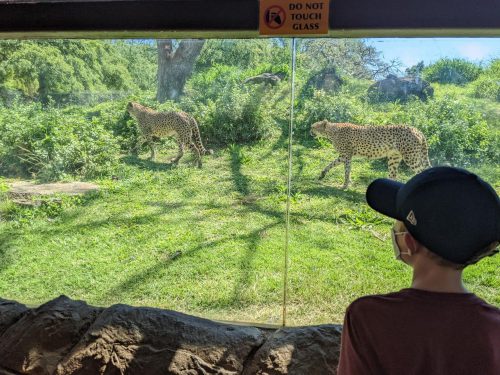
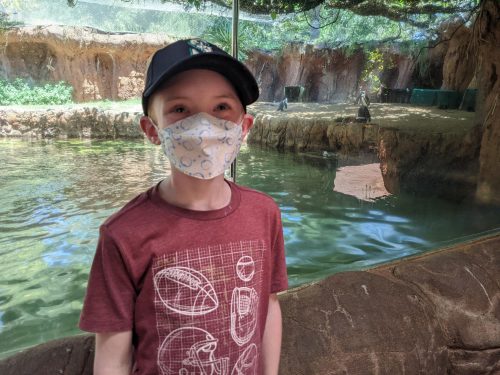
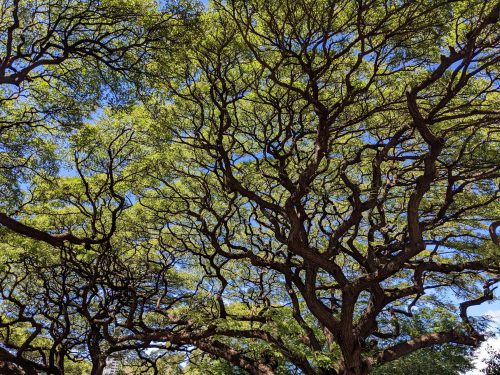
Another day, we walked over to the Honolulu Zoo. It’s not huge, but it was just about the perfect size. As we finished seeing most of the exhibits, we were all ready to get out of the sun for a bit. The animals were fun to see and Elijah learned about a new species of penguin, but my favorite part might have been the amazing trees!
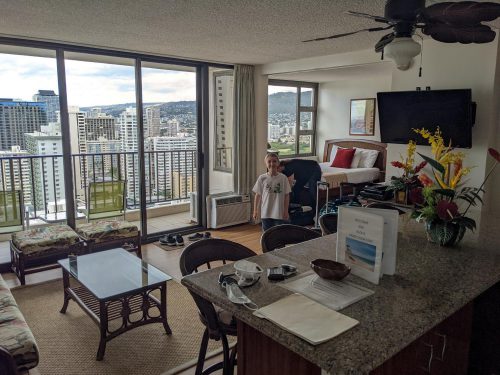
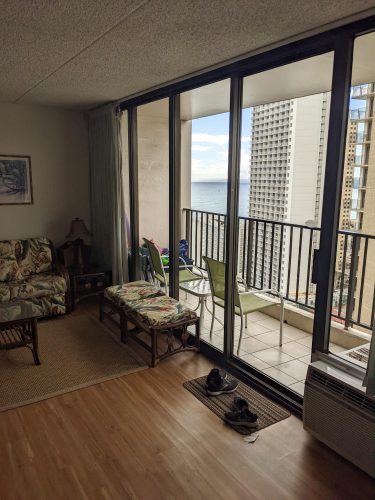
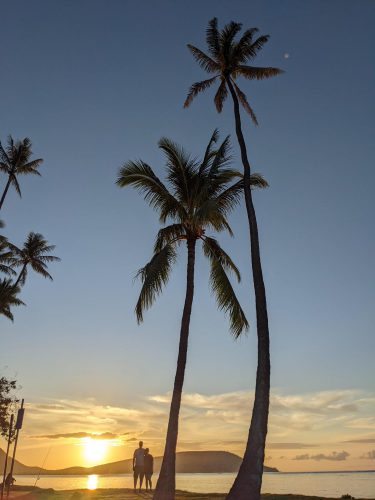
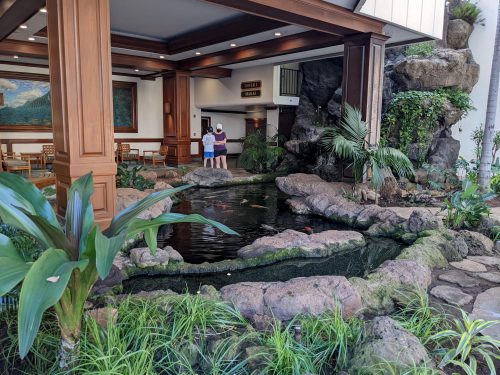
Other activities included a visit to Leonard’s bakery, boogie boarding in some waves, finding our annual ornament at the Waikiki Christmas Store, geocaching, a second trip to Kawaikui Beach Park, and checking out the Koi pond in the lobby. Our condo was on the 29th floor and our balcony had a nice view of the sunset. I suspect that in a couple weeks, the sunset view would be blocked behind another building, but the timing worked out well for us.
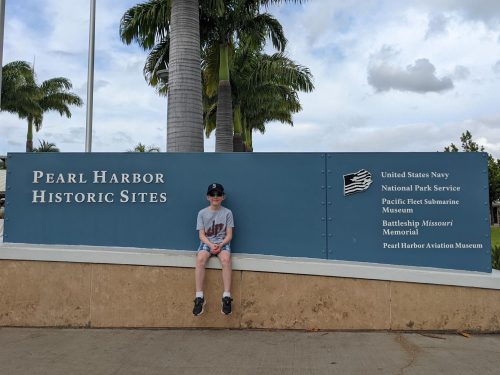
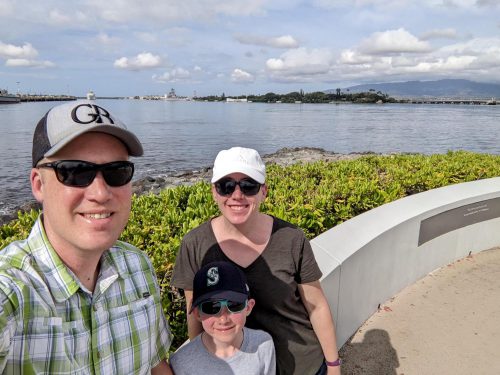
We had four complete days there with a travel day on each end. On our final day, we got packed up and had an extra hour or so to kill so we drove to Pearl Harbor Nation Memorial. It has free parking and free entry. Thankfully we got lucky and found a parking spot so we were able to walk around the grounds. The boat ride to the Arizona is free too but you have to book weeks in advance. I knew that going in and our plan was to just see the area but skip all the various museums and things that required tickets and entry fees. While I’d love to spend more time exploring the museums, I’m very thankful that we got to stop there so I can have a memory of that area. The historical accounts feel even more real when you can remember standing in the spot.
Our flights both ways were smooth and uneventful. We were tired when we got home but we were so thankful to have had the opportunity to take the trip and to get there and back safely and in good health. Aloha!
I’ve written before about the Kusto big data tool (aka Azure Data Explorer or ADX.) If your Azure budget was tightly restricted, you might not have a good way to play around with it and get enough confidence to push for it with your management.
Now you can visit http://aka.ms/kustofree and create a cluster for free very quickly! It’s obviously not a full-blown cluster but you can do plenty of exploration (more info.) I’ve been using one for my own random home projects and it’s great!
The Kusto docs have a good guide for getting started with the language and there’s even a short introductory course available too. If you have access to Pluralsight courses, here are some good ones to check out:
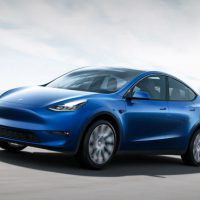
It’s interesting to see the reaction when someone finds out we are getting a Tesla. There are all the standard general EV responses, but there are also people that assume this means that I have a Bernie Sanders shrine in my house. It did get me wondering whether most Tesla buyers really are Democrats though.
A recent survey shows that 22% of Democrats were considering buying a Tesla and 17% of Republicans were considering it. [source] I suppose that a car choice can be political for some people, but for me it was long term cost of ownership, an interest in the technology, and a desire to buy American along with all the other reasons I cited in my original post.
In happier, non-political news, we continue to creep closer to our estimated delivery month of May. The estimate changes a bit so I don’t put a lot of stock in it, but every day that passes gets us closer.
Today I looked at the used car market and found our exact model for sale with 4000 miles. It was listed for $1839.49 more than what we’ll pay even after taxes and delivery/doc fees. I really do want to replace the Escape so that’s not enough to make me change my mind but it’s interesting to think about. Usually you drive off the lot and lose value, not gain it.
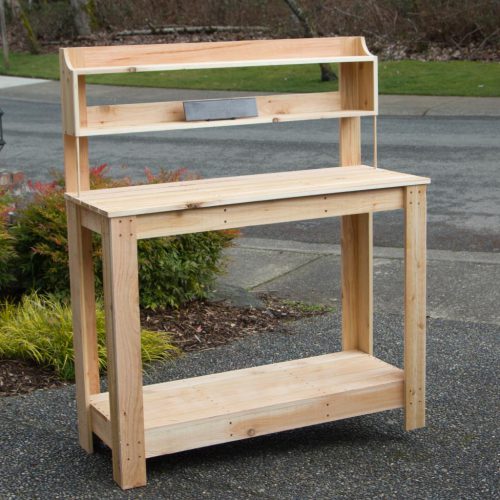
Elijah’s school is having another charity auction this year. I got ahead of the game and donated another wooden flag since those are fairly simple and it brought in a lot of money last year. A couple weeks ago, the school posted on the parent teacher group asking if someone would be willing to make a garden/potting bench. I don’t have enough to do so I volunteered.
My first step was downloading the Potting Bench plans from I Like To Make Stuff. This project isn’t rocket science, but it’s so nice to have all that thinking done for me. I was able to walk into Home Depot and get the right amount of wood in a single trip. I made a few changes to the plans though: I didn’t add the sink in the top and I made two shelves along the top instead of one. Since it was all screws and butt joints, I was able to finish it in a weekend.
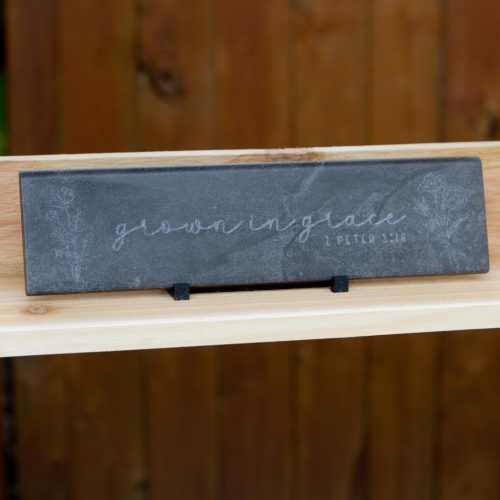
To add a little more to the project, I tried out my new diamond drag engraver bit for the CNC machine. I used it on a random tile that I bought at Home Depot. I picked a vaguely garden-related Bible verse (you have to squint and kind of take it out of context) and found a good SVG on Etsy that I could alter for my purposes. I didn’t etch is super deep, but when you’re up close, it’s easy to read the message and see the flowers on the sides.
I think that this is going to be part of a classroom project. The kids will donate related gardening supplies and then it will all get auctioned as one unit.
And since I was curious about wood prices when I started this project, I’ll share that the wood and a box of screws came to just under $200. It’s cedar so it will weather nicely outside or easily accept stain, but you could probably save a little money if it was pine.
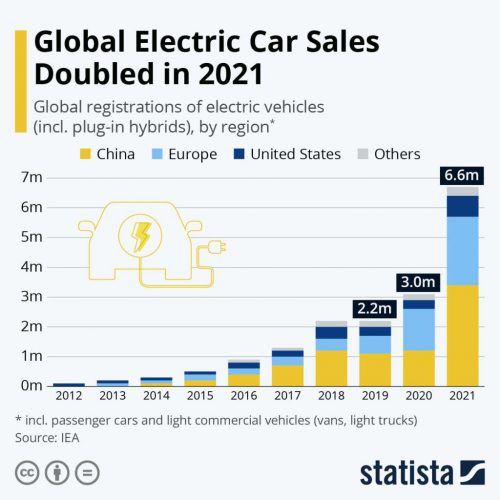
During the Super Bowl this year, there were seven car commercials and six of them featured at least one electric vehicle. It’s a giant land grab for anyone who wants to make a car. Here are some example stats:
In the last quarter of 2021, electric vehicles accounted for 10% of all new car sales in California and the Model Y and Model 3 were both in the top 5. The Model Y almost claimed the top spot for the best selling vehicle of any kind on California! There were 61,599 Camry’s sold and 60,394 Model Y’s.
Only 4% of cars sold in the United States in 2021 were electric but other countries are way ahead of us:
Norway: 86.2%
Sweeden: 45.0%
Germany: 26.0%
UK: 18.6%
China: 15.0%
Anecdotally, it is fun watching the uptake of electric vehicles around the Seattle area. We spot about one Tesla per minute as we drive around, but a lot of other electric vehicle brands are popping up too. I regularly spot Ford Mustang Mach E, Porsche Taycan, Volkswagen ID.4, and Hyundai Ioniq electric cars along with the more common ones like the Nissan Leaf and various hybrids.
The federal goal is to have 50% of all new passenger cars and light truck sales in 2030 be electric. Five years ago that might have sounded crazy, but now you kind of start to wonder who’s going to be willing to buy a new gas powered car 2030. Maybe 50% is a low estimate. At some point the value for gas engine cars is going to fall off a cliff so if you’re buying one, you’re resigning yourself to having no resale value and you’ll be paying a premium for keeping it running.
But we’re not there yet. Pretty much every car being sold today from any company is gas powered. Lots of things can happen to slow the uptake on electric vehicles too. One big sticking point is going to be the availability of battery material. Car companies can say they are bringing an EV to market, but actually producing them in quantity is another challenge. And even once you produce lots of them, there are plenty of challenges as Chevy is finding out with the Bolt. Chevy only sold 26 Bolts in the fourth quarter of 2021 because they were catching on fire and all of them recalled. Their sales total for the first quarter of 2022 is going to be 0 and they’re hoping to restart production in 2022.
This transition is not going to be easy. We will see which car companies survive and which new ones appear. If you look at the stock market, the pure EV companies are clearly the ones that people believe will have value going forward. I’ve written before about Tesla’s market cap being bigger than Ford, FM, Daimler, Fiat, Toyota, and VW combined, but since then, Rivian IPO’d and their market cap is roughly the same as most of those companies even though they’ve only shipped a couple thousand vehicles. Ford is even thinking about splitting off their EV business into a new company so that they aren’t dragged down by the slow death of the gasoline cars. The market clearly thinks that electric vehicles are the future.
It’s also worth noting that even if 50% of vehicles sold in 2030 might are electric, that doesn’t mean that 50% of ALL vehicles on the road will be electric. There will be gas powered cars around for decades and there will always be reasons why someone specifically needs a gas powered vehicle. It will just get more expensive and more niche to drive one. If you have a need or a desire to stick with gas vehicles, there will always be cars for you to buy. Just don’t expect that to be the norm.
As news about EVs rapidly gains momentum, it can feel like this is just a fad or the latest craze, but this is a movement that has been brewing for decades. Rather than being bump in the road, I think we’re experiencing a tipping point in the market.
We’re coming up on two years since the pandemic started for our family. Washington is one of the last states with a mask mandate, but that is now scheduled to end in a month in most situations and work is fully reopening campus in March. So let’s take a walk through some stats and see what’s going on.
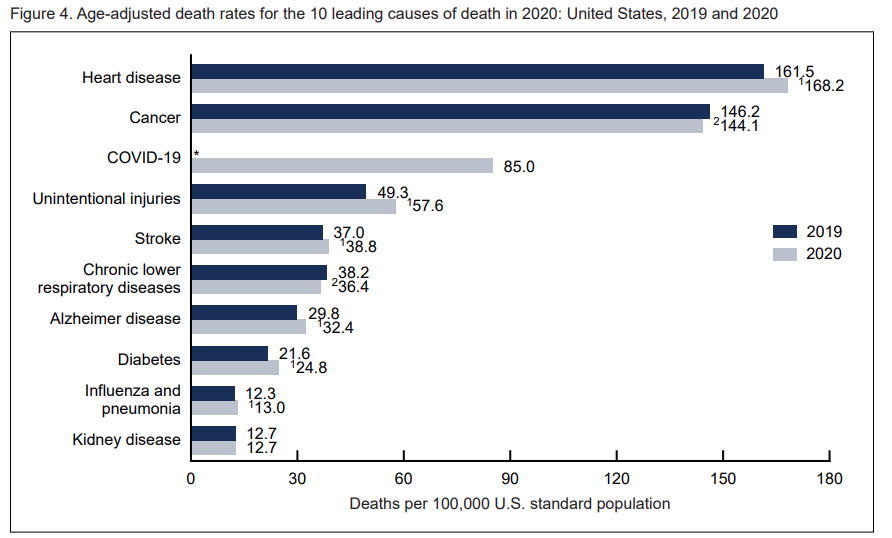
The official mortality data for the United States is available for 2020 now. The number of deaths each year grows with the population, but last year was one of the biggest jumps we’ve ever seen. Life expectancy decreased 1.8 years from 2019 to 2020 (from 78.8 years to 77.0 years) which is the largest single year decrease in more than 75 years. COVID was the 3rd most common cause of death. (If you really want to dive into this data, check out the CDC WONDER tool and get lost in the flood.) Globally those numbers are even worse and continue to be bad in places without the healthcare system that we have in place.
There are currently about 2000 people/day dying of COVID. If we leveled out here, that would be 730,000 deaths per year which would have COVID at the top of the list with 2020’s numbers. But we should be able to do better than that since the numbers are still falling. If we can bottom out at our lowest death rate and stay there, that would be 90,000 deaths per year, but we’ve already lost around that many people this year to Omicron so 2022 will be pretty high up on that list even in the best case. As a society we are in the middle of deciding how high up that list we’re willing to go. The catch is that this line item is arguably the one that we could control the easiest.
We’re getting to the point with Omicron where we’ll start to be able to assess how much immunity it provides. The health community defines a reinfection as occurring within 90 days, and we’re about 90 days out from when Omicron hit. That data will provide a good idea of how well the new policy changes will work, at least until the next variant hits.
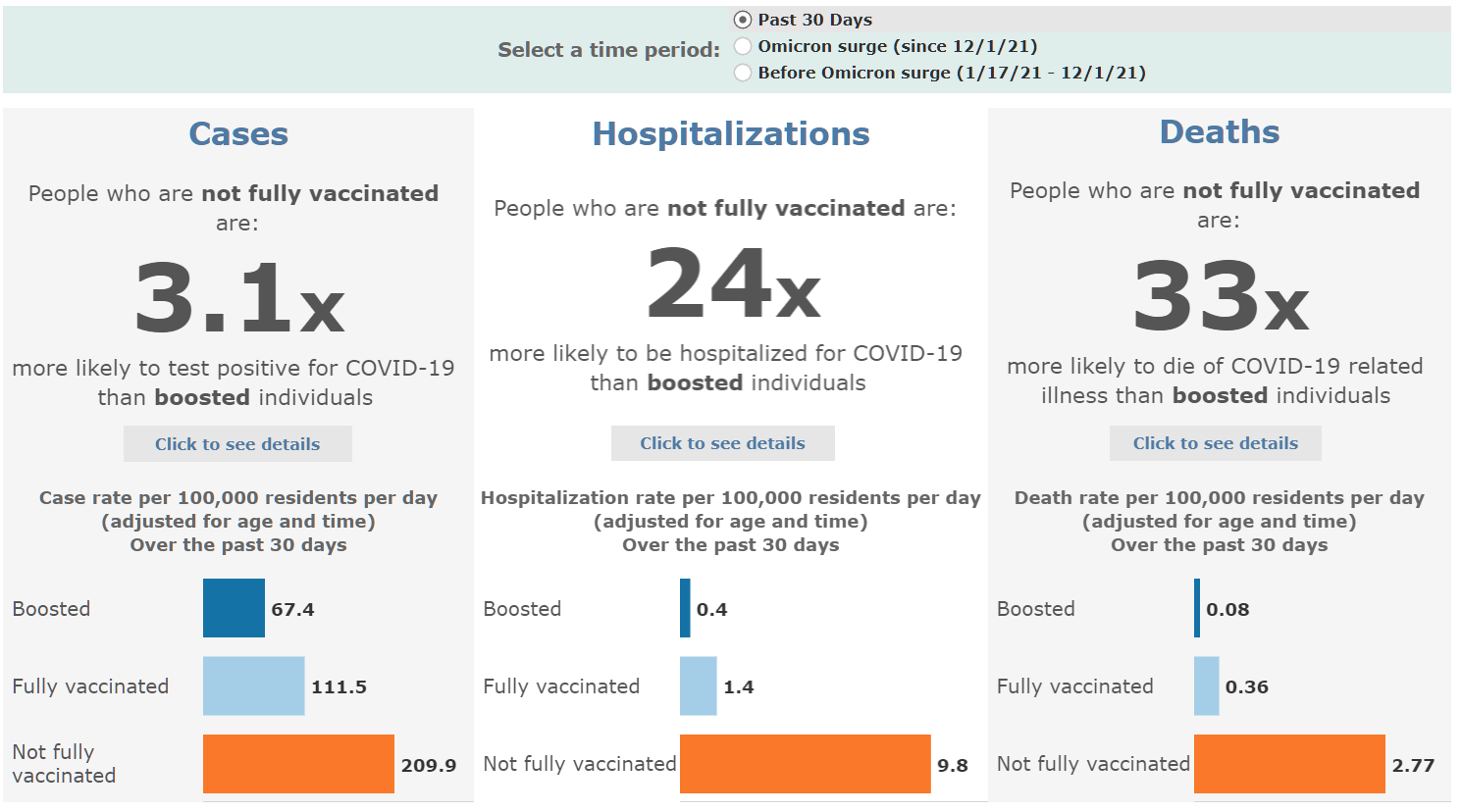
The general feeling is that we’re switching from a pandemic to an endemic. That feels a bit premature, but if we can loosen the restrictions for a while, maybe that’s healthy for the nation. But we need to be ready to put them all back in place if/when the next wave hits. Thankfully, vaccination rates are still climbing, but there are also people who aren’t getting boosted on time. My prayer continues to be that we can educate people so we don’t have to force behavior on them. There’s so much data available now to show how effective the vaccines are. In our county (the 12th largest in the country), you are 33x more likely to die from COVID in the last 30 days if you’re unvaccinated than if you’re vaccinated.
So we’re able to stop requiring masks to entire public places or vaccines to enter restaurants, but let’s watch the data and be ready to pull those tools back out when it’s time. Encourage everyone you know to get vaccinated and stay up to date with their booster shots. We’re probably going to be living with COVID forever, so vaccines will play a key role in us finding a new normal that doesn’t involve mandates.
As this drags on and everyone is seemingly at each others throats about what to do next, the future can seem hopeless and dim. A recent devotion reminded me to be “fiercely dependent” on God. He’s the only true source of comfort and peace. Everything else will fail but his love never will. He’s given us tools to fight the pandemic. So let’s use them and get on with the business of sharing the saving message of Jesus with the world. Imagine if we were as focused on spreading the gospel as we were with convincing people that we were right about politics…


COVID-19: Day 731
Yesterday marked two years from the semi-arbitrary date that I picked to be the start of COVID for our family. As much as I don’t want to write another COVID post, I feel like it’s good to keep documenting.
On Friday, Washington state lifted the mask mandate. Voluntary mask wearing was still nearly 100% in most stores over the weekend, but we’ll see how long that lasts. Over 80% of our county (12th largest in the country) has been vaccinated and if you cut it down to people 5 years and older, 92.5% have received at least one dose. This is awesome progress!
At work, campus is opening up again. This whole time I’ve wondered if everyone would slowly filter back into the office and give up on remote work, but that doesn’t seem to be the case at all. I don’t think I should share numbers, but a much larger percentage of people than I expected are working remotely at least part of the time. And even more encouraging is that a number of senior managers are moving to other parts of the country to work remotely full time. This really does feel like it is here to stay and I’ve officially given up my office at work.
Globally, the virus rages on. Countries are still setting new record highs of case counts and deaths. Vaccination rates are exceptionally low in most of Africa and other poorer countries. The vibe in America seems to be “yay it’s over!” but we can’t let up on the accelerator. There’s a lot of work to be done.
I also have a tough time believing the “yay it’s over” vibe. It does look like a lull in the storm, but as vaccinations wear off and we hit the end of summer, I don’t see anything preventing us from getting another spike in cases and/or another strain of the virus. We’re going to be living with this for a long time, but hopefully we’ll be able to use vaccines, masks, and social distancing to control the spread and kill as few people as possible.
It’s easy for me to spend my time looking ahead and wait for the next spike to come, but I’m trying to focus on enjoying the lull in the action and being thankful for it.