
 MattB posted an article on Facebook that I felt deserved it’s own post here. It’s from thefederalist.com and is called “The Death Of Expertise”. The article discusses how our society is full of people who search the internet for 5 minutes and then denounce legitimate experts as idiots. Here are a couple quotes from the article but I encourage you to read the whole thing:
Yes, it’s true that experts can make mistakes, as disasters from thalidomide to the Challenger explosion tragically remind us. But mostly, experts have a pretty good batting average compared to laymen: doctors, whatever their errors, seem to do better with most illnesses than faith healers or your Aunt Ginny and her special chicken gut poultice. To reject the notion of expertise, and to replace it with a sanctimonious insistence that every person has a right to his or her own opinion, is silly…
People in political debates no longer distinguish the phrase “you’re wrong” from the phrase “you’re stupid.” To disagree is to insult. To correct another is to be a hater. And to refuse to acknowledge alternative views, no matter how fantastic or inane, is to be closed-minded…
Thus, at least some of the people who reject expertise are not really, as they often claim, showing their independence of thought. They are instead rejecting anything that might stir a gnawing insecurity that their own opinion might not be worth all that much.
 I’ve lived in a lot of different cities which means that cheering for the Bears, Colts, Vikings, and Eagles could have all made sense in the past. With all that traveling, I didn’t really cheer for one team (except for a stint where I cheered for the Cowboys? I think it was because of the Aikman, Emmitt, Irvin trio.)
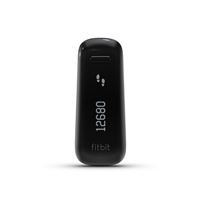 Last year I picked up
  For the past few years, the NASCAR season has been split across three networks: FOX, TNT and ESPN/ABC. FOX does the best job and TNT coverage is a joke. When we adjusted our cable package, it meant that I wouldn’t be able to watch the races that were on TNT or ESPN. However it looks like that will be changing. In 2015, FOX will get the first 12 races and NBC will get the last 24 races. That means no more TNT or ESPN. I think that’s a win for the sport both because it means fewer changes of network and it drops the two worst coverage teams. Hopefully NBC can put together a good team. It will also give them something big to show at the end of the season when CBS and FOX are running NFL games and will be a big lead-in to their Sunday Night Football games.
 We’ve had a
  I’m sure Facebook has some business reason for forcing me to view my news feed in the “Top Stories” order, but it’s really frustrating to me. I don’t care about what they think are the top stories. I just want to see things in the order they happened. Thankfully they change the URL when you change your sort order, so if you want to always view your news feed in “Most Recent” order, change your bookmark to
 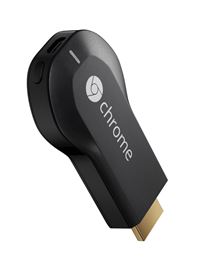 When we ditched a bunch of our cable stations, I picked up a Chromecast to help simplify streaming. For those of you that haven’t heard of it, it’s a little device a little bigger than a USB stick. It plugs directly into an HDMI port on your TV. You then install a plugin for the Chrome browser (or on your Android phone) and you can use your laptop or phone as a remote control to choose videos on YouTube, Netflix, and some other streaming sites. The reason it made such a splash is that after you pick your video, you don’t have to stay on that page with your laptop. You can keep browsing around while the Chromecast streams the video. And oh, yeah, it’s only
Tracking Food
Wow. It worked even better than I thought. Even though I’m not planning to show the list to anyone else, it’s embarrassing to write down a handful of chips, a candybar or two, or a morning piece of pie.
Writing it down on a piece of paper would probably have been good enough, but I took it one step further and tracked it in the Fitbit website. They have a huge food database so I just enter in what I ate and it adds up the carbs, etc.
I probably won’t keep this up for a long time, but it has been a good exercise and it’s one that I’ll revisit if I find myself snacking a lot again. Let me know how it works for you if you try it too!